
About This Generator
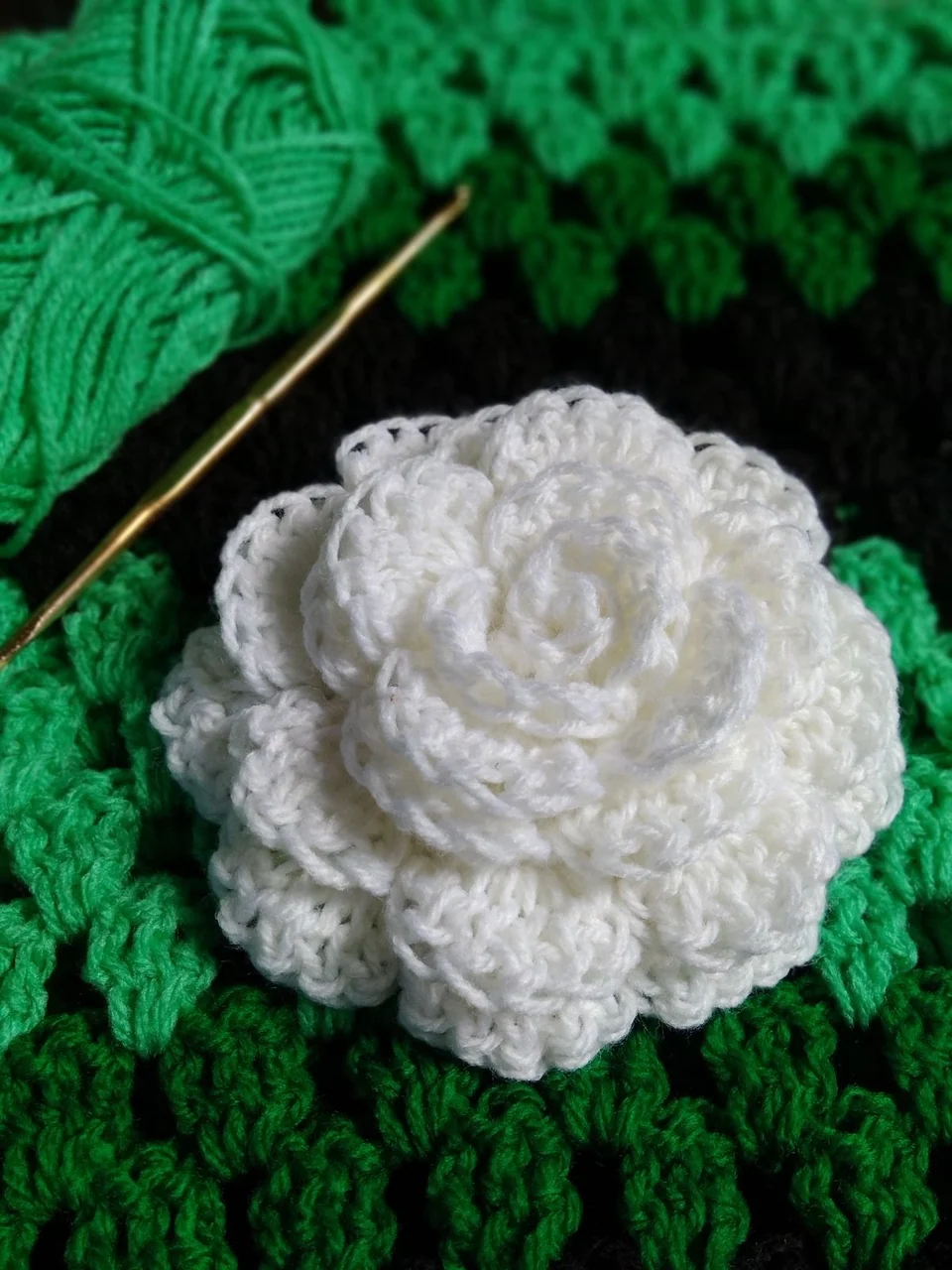
The 3D Crochet Flower Generator supplies counted crochet components and separate shaping or sewing instructions for ten supported constructions. Choose a rolled rose, cup tulip, offset layers, raised daisy, expanded carnation, separately attached two-color petals, six-blade lily, three-head bouquet, five-head bouquet or open-center wreath. These designs use different source recipes and assembly routes. They are not photographs, simulated finished flowers or a guarantee of a particular diameter. The original rolled-rose mode remains available for earlier saved projects.
How to Use This Generator
Choose Flower construction first. The rose-petal field controls three through twelve shells in a rose, expansion repeats in a carnation, or separate petals in the two-color design. Fixed daisy, lily and layered recipes do not use that field. Tulip growth rounds supports two through six and even rounds supports one through eight. Bouquet heads use those same tulip settings. Soft stem or hanger foundations supports twelve through eighty chains and is relevant to bouquets and the wreath. Controls that do not affect the selected design are disabled.
Choose yarn colors and US or UK terminology. Beginner View keeps the reading controls accessible; Advanced View exposes the detailed parameter and editing controls. Regenerate after a parameter edit, then review each named component, its copy quantity and the separate finishing references. Save project keeps a browser-local version. Export JSON preserves the full source recipe and settings for restoration; keep an external copy when work matters. Undo and Redo recover supported parameter changes. Export SVG retains a vector worksheet, while Print opens the browser's print dialog.
Understanding the Crochet Pattern
Symbol Chart identifies real receiving bases and standard stitch symbols. Written Pattern gives the complete row or round order. Stitch Preview draws corresponding loop schematics; it does not calculate physical fabric drape. Select a written step to locate its source diagram and select a diagram reference to find the corresponding step. A component drawn once with quantity six must be made six times. Individual recipe counts are per copy, while the project workload multiplies by the required quantities.
Count crochet outputs separately from foundation chains, decorative chains, routine joins and sewing. A petal-closing slip stitch can be an explicit counted construction output. A routine joining slip stitch is excluded when the step says so. A finishing reference with three rim tacks means three sewing connections, not a new three-stitch crochet round. Read the unit printed beside each count before comparing totals.
How the Generator Works
The rose has a three-base shell repeat. The carnation instead expands each first-row sc into five dc, then each new dc into three dc before rolling. A tulip is an unfilled open cylinder whose final rim is brought together at three equally spaced points. The daisy combines an eight-petal applique and a small separately closed center. Layered flowers use two distinct five-petal recipes, offset before sewing. The lily combines an open twelve-stitch cup rim and six derived leaf-shaped blades with actual new-chain picot closures.
Bouquets flatten their component register so every head, center and cord remains individually readable. Their soft stem cords are chains with a return row of slip stitches; no wire or rigid standing stem is implied. The wreath begins with an open chain ring and three increasing annular rounds. Six rolled roses attach to named outer-rim receiving pairs. Its crocheted band remains flexible, so real support and hanging behavior need a physical trial.
Step-by-Step Worked Example
Choose Source-chart rolled rose and six petals. Chain nineteen, skip the nearest chain and make eighteen sc. Chain one and turn without counting the lift. Repeat slip stitch in the next base, five dc in the next base and slip stitch in the third base six times. Row two has thirty dc and twelve slip stitches, or forty-two outputs. Both worked rows together contain sixty outputs. Roll with the foundation edge underneath and sew through every foundation layer, leaving shell tops free. The separate finishing reference adds no crochet stitches.
For a contrasting structure choose Three-lobed cup tulip with growth rounds three and even rounds three. Its six round counts are six, twelve, eighteen, eighteen, eighteen and eighteen, totaling ninety sc. Mark final-rim positions one, seven and thirteen. Bring those three points together and secure the three stated connections while leaving intervening arcs free. Do not close the whole rim like a stuffed sphere.
Download this worked example as JSON. Restore it in this generator to compare the actual counts and structure.
Practical Tips
Use smooth compatible yarn, a matching hook, removable markers, scissors and a tapestry needle. Label separately made parts before assembly. Pin layers or heads temporarily and compare their measured spans before tightening seams. Leave attachment tails long enough for the actual sewing path. Lightly fill only the closed raised daisy center as directed; tulip and lily cups stay unfilled. Assess washing requirements for every yarn and the receiving item together.
Common Mistakes and Solutions
A partial rose shell indicates that the first-row width is no longer a multiple of three. A flat carnation may be missing its second three-for-one expansion. A tulip sewn completely shut loses the intended three open lobe arcs. A lily blade attached at its far picot tip reverses its intended orientation. Check the named sources and component order before correcting any of these by tightening a finishing tail.
Second Reproducible Application
Use this comparison to check how one input changes the 3d crochet flower generator output. Enter flowerStyle = rose; petals = 7. Keep any grid and color data from the downloadable worked example unchanged. Generate again and compare the result with the first example above. The resulting dimensions are 70 crochet outputs before separate finishing;measure the real flower. These depend on the entered block size, not a measured finished sample. This comparison was executed with the site's engine; it is a numerical construction check rather than a claim about physical gauge. Save both settings separately if you want to compare them later.
Related Tools and Guides
The Tools directory at /generators/ lists the available generators. Use the linked examples on this page to study the same construction with different inputs, and the Guides directory at /guides/ for supporting reading. Check terminology and measured gauge before combining output from different tools.
Frequently Asked Questions
Does changing the palette change the construction?
It changes the supported yarn roles, not the stitch sources, seams or component quantities. The two-color design explicitly alternates separately attached petals and requires every yarn end to be secured.
Are the bouquets rigid enough to stand in a vase?
The supplied cords are flexible. No rigid stem, armature or tested standing balance is included.
Why does the lily blade have seventeen outputs?
Its two-sided leaf sequence has sixteen main stitches plus one counted slip stitch closing the additional three-chain picot. The decorative chains are recorded separately.
Can I predict the finished size from the SVG?
The drawing is a source schematic. Measure a real sample made in the selected yarn and tension, including its final rolling and shaping.
Does UK mode change the source geometry?
It changes stitch terminology while preserving the counted construction, coordinates and yarn roles. US sc, hdc, dc and tr appear as UK dc, htr, tr and dtr.
Should every layer edge be sewn down?
Follow the named central tacks and receiving references. Sewing free petal tops together can flatten the intended relief or distort the real fabric.